Building it
The Fire
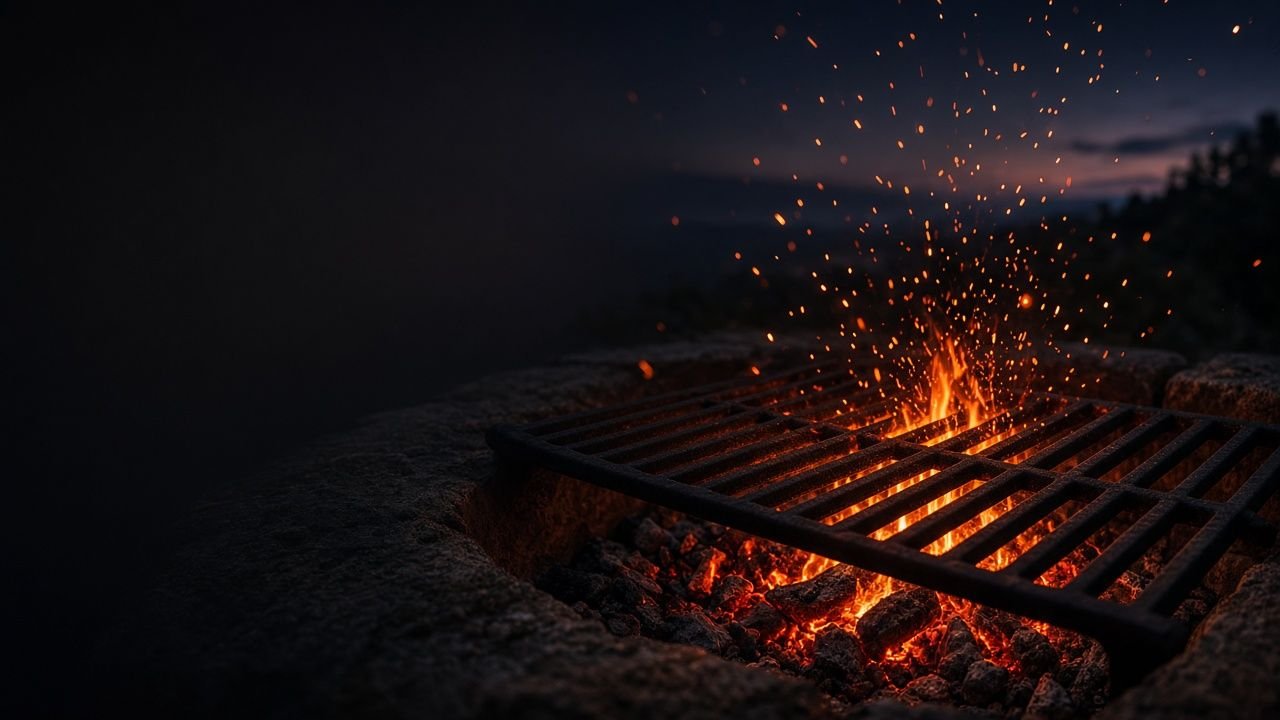
A cooking fire is built for coals, not for show. It needs dry fuel, plenty of air and a little patience before any food goes near it.
Where to build it
Check local rules first; open fires are often restricted in dry weather. Use an existing fire pit or a patch of bare ground, well clear of tents, trees, fences and overhanging branches. Keep a bucket of water and a shovel beside you before you light anything.
Tinder, kindling, fuel
Start with a loose handful of tinder: dry grass, birch bark, wood shavings or a natural firelighter. Lean thin, dry sticks of kindling over it, leaving gaps for air. Once those are burning well, add progressively thicker split wood.
Air is the engine
Fire needs oxygen as much as fuel. A tight pile of logs smothers itself; a loose structure with space between pieces burns hot and clean. If it smokes and struggles, open it up rather than adding more.
Waiting for coals
For most cooking, let the fire burn down for thirty to forty-five minutes until you have a bed of glowing coals with a fine coat of grey ash. Rake the coals into a hotter area and a cooler area so you can move food between them.
Putting it out
Drown the fire with water, stir the ashes with the shovel, and drown it again. Feel carefully for heat with the back of your hand held above the ashes. Do not leave until everything is cold.
Fire is dangerous. Supervise it at all times, keep children and pets well back and never use petrol or other accelerants.